
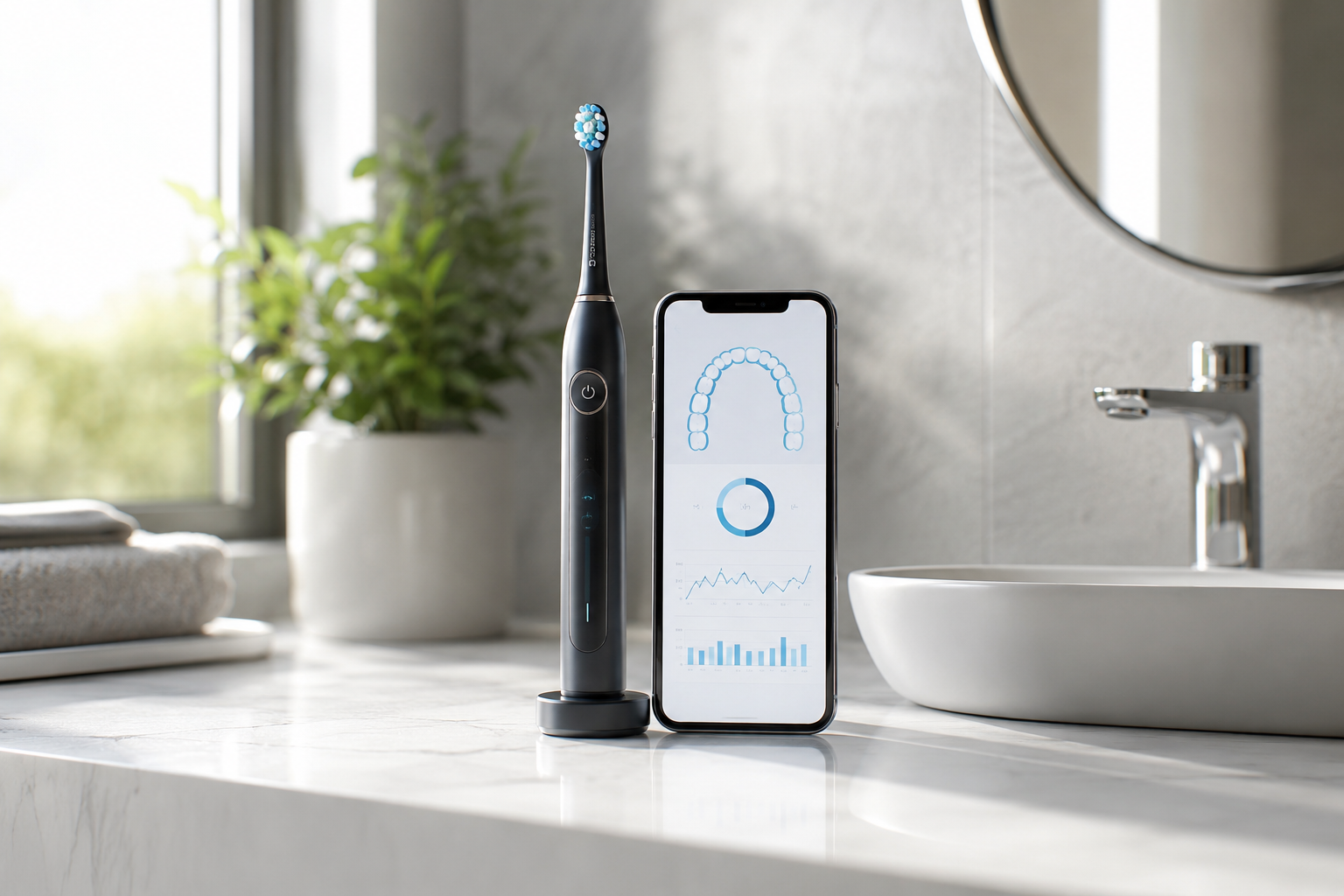
Brushing your teeth seems simple enough, but many people still wonder whether they are brushing for long enough, applying too much pressure, or missing certain areas of their mouth. Smart toothbrushes are designed to answer some of these questions by using built-in technology to provide feedback about your brushing habits. At Kitchener Dentist Centre, patients sometimes ask whether upgrading to a smart toothbrush can actually improve their oral health or whether a regular electric toothbrush works just as well.
The answer largely depends on your brushing habits, your dental needs, and whether you will actually use the additional features smart toothbrushes offer.
What Is a Smart Toothbrush?
A smart toothbrush is generally an electric toothbrush equipped with sensors and, in many cases, Bluetooth connectivity. It may connect to an app on your smartphone and record information about how you brush.
Depending on the model, a smart toothbrush may track:
- How long you brush your teeth
- How much pressure you apply
- Which areas of your mouth you have brushed
- How frequently you brush
- When the brush head should be replaced
Some models also provide real-time guidance, showing you areas you may have missed while brushing.
These features do not replace good brushing technique, but they can make it easier to recognize habits that may need improvement.
How Can a Smart Toothbrush Help?
One of the biggest advantages of a smart toothbrush is the feedback it provides.
Most people do not intentionally brush incorrectly. Instead, they may develop habits without realizing it. For example, you might consistently spend more time brushing the front teeth while giving the back molars only a few seconds.
A smart toothbrush can help identify these patterns.
Better Brushing Time
Dentists generally recommend brushing for about two minutes twice a day. Many electric and smart toothbrushes include built-in timers that divide brushing time between different sections of the mouth.
This can be especially useful for people who tend to rush through their morning routine.
Pressure Monitoring
Brushing harder does not necessarily make teeth cleaner. In fact, aggressive brushing may irritate the gums and contribute to enamel wear over time.
Many smart toothbrushes include pressure sensors that alert you when you are pressing too firmly.
Improved Coverage
Some advanced brushes use motion sensors to estimate which areas of your mouth you have cleaned. An accompanying app may highlight areas that need more attention.
While the technology is not perfect, it can encourage more thorough brushing.
Who Might Benefit Most From a Smart Toothbrush?
Not everyone needs one. A good manual or standard electric toothbrush can be very effective when used properly.
However, smart toothbrushes may be particularly helpful for certain people.
People Who Frequently Miss Areas
If your dentist or dental hygienist regularly points out plaque buildup in the same areas, brushing feedback can help you stay consistent.
People Who Brush Too Hard
If you tend to press firmly against your teeth and gums, a toothbrush with a pressure sensor may help you learn to use a gentler technique.
Teenagers and Tech-Savvy Users
Some people respond well to visual progress reports, reminders, achievements, and other app-based features. These tools can make brushing routines more engaging, particularly for older children and teenagers.
Parents should still supervise younger children and make sure they are brushing correctly.
People With Braces or Other Dental Appliances
Cleaning around brackets, wires, retainers, bridges, and other dental work can require additional attention. While a smart toothbrush cannot guarantee that every surface is clean, brushing guidance may help users develop a more structured routine.
If you have orthodontic appliances or extensive dental work, ask your dentist or hygienist which toothbrush and brush head are appropriate.
Do You Really Need the Most Expensive Model?
Probably not.
Smart toothbrush prices vary considerably, and more expensive does not automatically mean better oral health.
When choosing a toothbrush, focus on practical features rather than the number of technological extras. A useful toothbrush should have soft bristles, be comfortable to hold, and make it easy to brush thoroughly for 2 minutes.
Features such as pressure monitoring and a timer can provide genuine value. Other features, such as detailed brushing scores or extensive app statistics, may be useful only if you review them regularly.
The team at Kitchener Dentist Centre can also provide personalized brushing recommendations based on your teeth, gums, dental restorations, and plaque-prone areas.
Smart Toothbrushes Still Cannot Replace Flossing
Even an advanced toothbrush cannot properly clean every surface between your teeth.
Daily cleaning between teeth remains important. Depending on your needs, this may involve dental floss, interdental brushes, or another dentist-recommended product.
Your daily routine should generally include brushing twice a day with fluoride toothpaste and regularly cleaning between your teeth.
Signs Your Brushing Routine May Need Attention
Technology can help, but your mouth can also signal when something needs to change.
Speak with a dentist if you notice:
- Gums that frequently bleed when brushing or flossing
- Persistent bad breath
- Red, swollen, or tender gums
- Increasing tooth sensitivity
- Gum recession
- Visible plaque or tartar buildup
- Tooth pain or discomfort when chewing
Bleeding gums should not simply be ignored or assumed to be caused by brushing too hard. They can also be associated with gum inflammation and should be evaluated if they continue.
Technology Works Best With Preventive Dental Care
A smart toothbrush can help you develop better habits, but it cannot diagnose cavities, remove hardened tartar, evaluate gum health, or identify problems developing beneath the surface.
Regular dental examinations allow your dental team to monitor changes in your teeth and gums and address concerns before they become more complicated.
Professional cleanings are also important because tartar cannot be removed effectively with normal brushing once it has hardened.
Combining good home care with routine dental visits provides a much stronger foundation for long-term oral health than relying on technology alone.
If you are considering a smart toothbrush or would like to know whether your current brushing routine is working well, a dental examination is a good opportunity to ask. To schedule a checkup or discuss your oral health, contact the office at 519-578-7830 and book your appointment with Kitchener Dentist Centre.
DISCLAIMER: The advice offered is intended to be informational only and generic in nature. It is in no way offering a definitive diagnosis or specific treatment recommendations for your particular situation. Any advice offered is no substitute for proper evaluation and care by a qualified dentist.
