
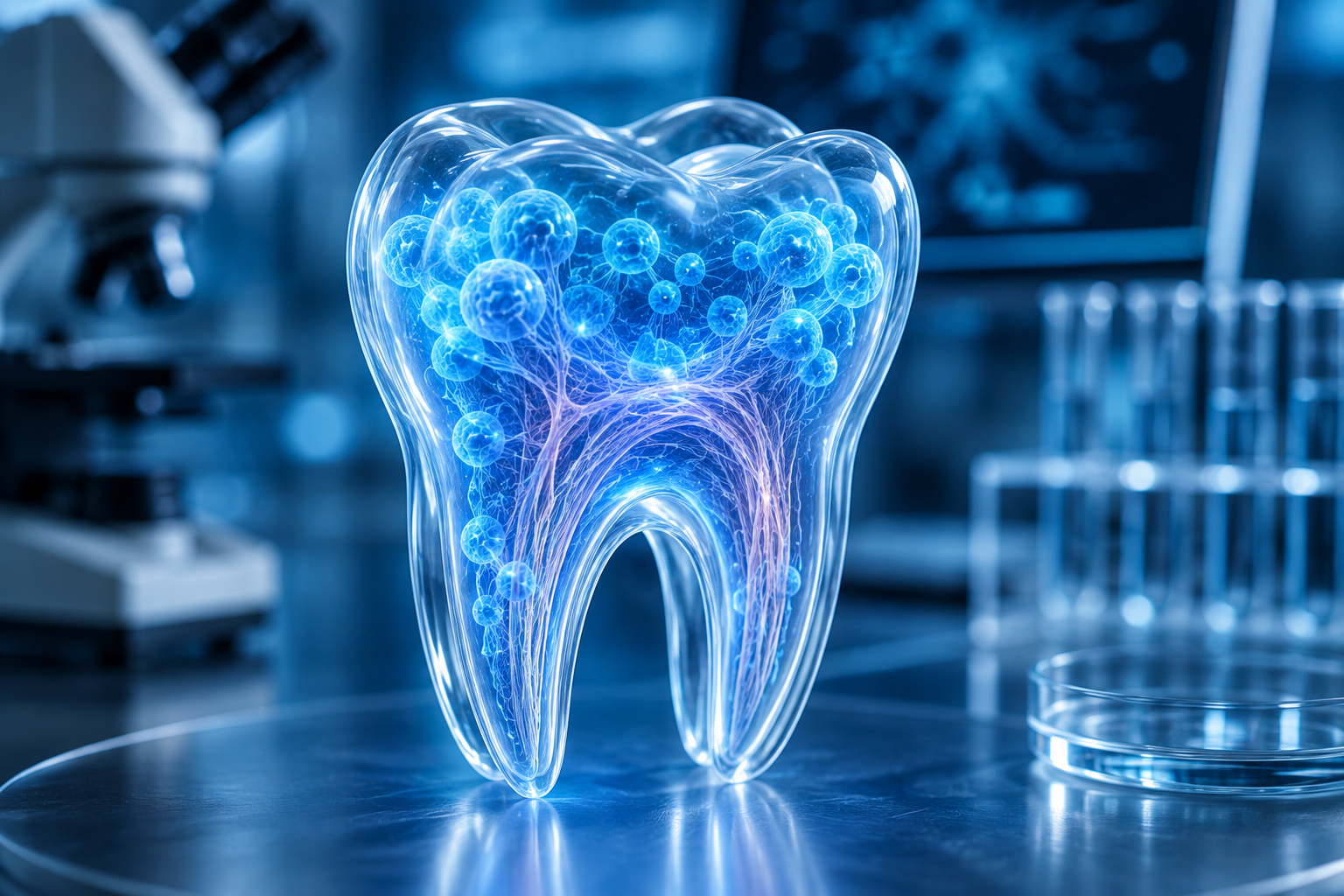
Losing a permanent tooth can affect much more than your smile. It may make eating uncomfortable, change the way you speak, and eventually affect the surrounding teeth and jawbone. It is no surprise that many people wonder whether dentistry will one day make it possible to simply grow a new tooth.
For patients visiting Kitchener Dentist Centre, the question is particularly interesting because tooth-regeneration research has moved beyond laboratory experiments and into early human studies. However, growing a replacement tooth is not yet an option available at your local dental office.
So, can adults really regrow teeth? Here is what the research currently tells us.
Why Don’t Adult Teeth Normally Grow Back?
Humans generally develop two natural sets of teeth: primary, or baby, teeth and permanent adult teeth.
When a permanent tooth is lost due to decay, gum disease, injury, or another cause, the body does not naturally replace it. Unlike skin or bone, a complete tooth has a complicated structure that includes enamel, dentin, nerves, blood vessels, and roots.
Enamel is especially limited in its ability to repair itself. Once a significant amount of enamel or tooth structure has been destroyed, the body cannot simply replace it.
That is why dentists currently rely on treatments such as fillings, crowns, root canal therapy, dental implants, bridges, and dentures to repair or replace damaged and missing teeth.
What Is Tooth-Regeneration Research?
Researchers have been investigating whether biological processes involved in early tooth development can be reactivated.
One of the most closely watched areas of research involves a protein called USAG-1. This protein helps regulate signals involved in tooth and bone development.
Scientists discovered in animal studies that blocking USAG-1 could promote tooth development in certain situations. Scientists have since developed a monoclonal antibody, TRG-035, to target this protein.
The research has now reached human testing. According to Toregem BioPharma, the company developing TRG-035, with research originating from Kyoto University, has completed its Phase I clinical trial in Japan. The initial study focused primarily on evaluating safety, and preparations for further clinical trials are underway.
Importantly, this does not mean researchers have proven that adults can routinely receive a medication and grow replacement teeth. Publicly available evidence has not yet demonstrated successful tooth regeneration in humans as an established treatment.
Who Could Benefit From This Research First?
The early focus is not simply on replacing any lost tooth.
Researchers are particularly interested in congenital tooth agenesis, a condition in which a person is born without certain permanent teeth. Current studies are examining whether controlling the biological signals involved in tooth formation could eventually stimulate tooth development in these patients. Recent scientific research continues to explore imaging and other methods to measure newly developing teeth in future clinical trials.
Replacing teeth lost later in adulthood with similar technology may be a much more complicated challenge and would require considerably more research.
Can You Regrow a Tooth Today?
At this time, no approved dental treatment can reliably regrow an entire permanent tooth after it has been lost.
If you see advertisements suggesting that a supplement, toothpaste, home remedy, or special treatment can grow a completely new adult tooth, approach those claims carefully.
Modern dentistry can sometimes preserve and repair surprisingly damaged teeth, but preventing tooth loss remains much more predictable than replacing a tooth after it is gone.
At Kitchener Dentist Centre, your dentist can evaluate whether a damaged tooth can still be restored or whether another treatment would provide a better long-term solution.
What Are the Options If You Lose a Tooth?
While regenerative dentistry continues to develop, several well-established treatments are available today.
Dental implants replace a missing tooth root with an implant that supports a dental crown. They can provide a stable, natural-looking replacement when the gums and jawbone are healthy enough for treatment.
Dental bridges use neighbouring teeth or other supports to replace the visible portion of a missing tooth.
Partial or complete dentures may replace several missing teeth and can be an appropriate solution depending on your oral health, preferences, and budget.
The right treatment depends on factors such as the location of the missing tooth, bone levels, gum health, neighbouring teeth, medical history, and personal goals.
Protect the Teeth You Already Have
Regenerative dentistry is exciting, but prevention remains one of the most effective ways to maintain a healthy smile.
Simple habits can make a meaningful difference:
- Brush twice daily with fluoride toothpaste.
- Clean between your teeth every day using floss or another recommended interdental cleaner.
- Limit frequent sugary and acidic foods and drinks.
- Avoid smoking and tobacco products.
- Wear a mouthguard during sports or activities where dental injuries are possible.
- Do not ignore persistent tooth sensitivity, pain, bleeding gums, or loose teeth.
- Keep regular dental examinations and professional cleanings.
Regular checkups also allow your dental team to identify small cavities, gum problems, cracked teeth, and other concerns before they become more difficult to treat.
When Should You Visit a Dentist?
You should arrange a dental assessment if you have a broken or missing tooth, persistent toothache, swelling, increasing sensitivity, gums that frequently bleed, or a tooth that feels loose.
Even when there is no discomfort, routine dental examinations remain important. Some dental problems can develop quietly and may not cause obvious symptoms until significant damage has occurred.
The Future of Regenerative Dentistry
The idea of growing natural replacement teeth is becoming a serious area of scientific research rather than simply science fiction. A 2026 review of USAG-1 research described encouraging preclinical findings while emphasizing that important questions about safety, treatment delivery, effectiveness, and long-term outcomes remain unanswered.
For now, the best approach is to protect natural teeth whenever possible and use proven restorative treatments when damage or tooth loss occurs.
If you have concerns about a damaged or missing tooth, or simply want to stay ahead of dental problems with preventive care, call 519-578-7830 to book an appointment or contact Kitchener Dentist Centre.
DISCLAIMER: The advice offered is intended to be informational only and generic in nature. It is in no way offering a definitive diagnosis or specific treatment recommendations for your particular situation. Any advice offered is no substitute for proper evaluation and care by a qualified dentist.
